Children have a heavy academic workload and spend more time at home, losing many opportunities to exercise. However, the development of children’s limb muscles is very important, and some stretching exercises for the waist and upper limbs can be done at home.
The first set of exercises is the lunge and twist, which helps to exercise the core muscles and lower limb muscles. First, open your feet to hip width, place your hands on both sides of your body, step out with your right foot to maintain a 90-degree angle on both knees, open your hands with palms facing forward, slowly turn to the right, and hold for two seconds. Then return to the original position with hands hanging down, repeating on both sides ten times.
The second set of exercises is quadruped limb raises. These exercises help strengthen our back and limb muscles. If possible, use a yoga mat to avoid putting pressure on your knees. First, start on all fours with your hands shoulder-width apart and your knees hip-width apart. Lift your right hand and left leg straight out, creating a horizontal line. Tighten your back and abdominal muscles, hold for two seconds, then switch to your left hand and right leg. Alternate between both sides for a total of ten reps.
It’s already been 3 months into 2023 and summer vacation will be coming soon, followed by the start of the new school year in September. For K3 students to start their primary school life. However, these students have spent most of their 3-year kindergarten education in online classes due to the pandemic, with little face-to-face interaction. How can parents help them adapt to their new academic and social life in terms of their psychological and physical well-being?
Students who are promoted to Primary 1 are at most at K2 level because they have not returned to school for at least one full year. There are many things they need to adapt to when transitioning from kindergarten to primary school. These include school schedules, daily routines, and learning styles that are vastly different from what they are used to. Kindergarten classes typically last for around 20 minutes, after which they move on to another subject, but in primary school, classes can be 35 minutes or longer, making it difficult for them to maintain their focus. All of these issues can create significant adaptation problems for young students.
So how can parents explain these changes to their children? Firstly, parents should not be too anxious, as many primary schools offer simulation courses and adaptation weeks for new students, as well as school visits. Primary schools are usually much larger than kindergartens, and young students may be excited about the various facilities and opportunities available to them. However, it is best to start talking to them once they begin school, as too much information too soon may be overwhelming. Simply telling them, “Yes, this is what school is like” is often enough.
Additionally, some things that young students may not be capable of now do not mean they cannot accomplish them, they just need time to grow and develop. Parents need to remember that every child has a different growth rate. After starting school, observe their emotional changes when they return home from school, and if you notice any issues, pay close attention to them
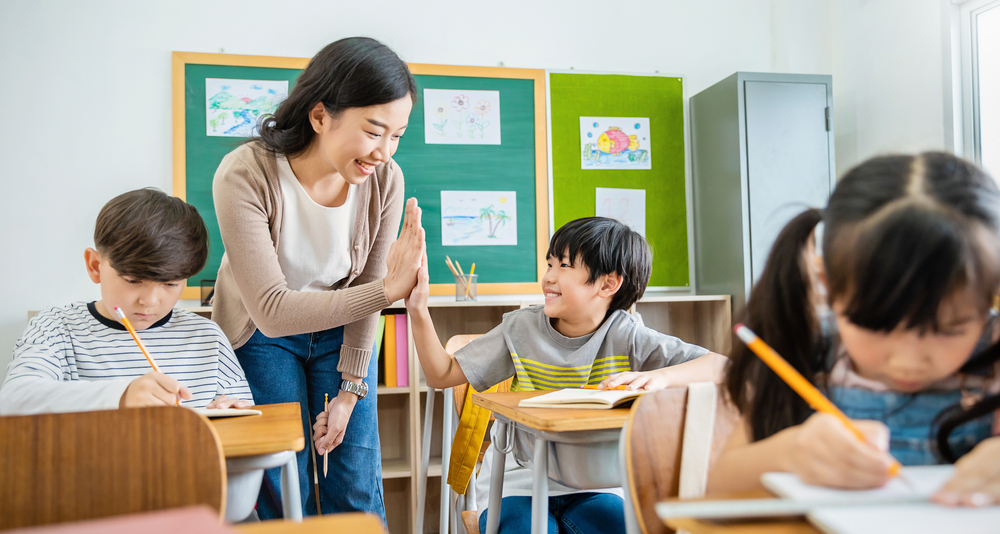
It takes time for young children to adapt, but sometimes parents also need to adapt. In kindergarten, we refer to it as the Homeroom(regular class location), where one teacher leads the class, and children usually only see one or two teachers. If parents need to participate or collaborate with the school, they can simply find that teacher. In primary school, each subject has different teachers, so if any issues arise, parents need to consider how to communicate with each teacher.
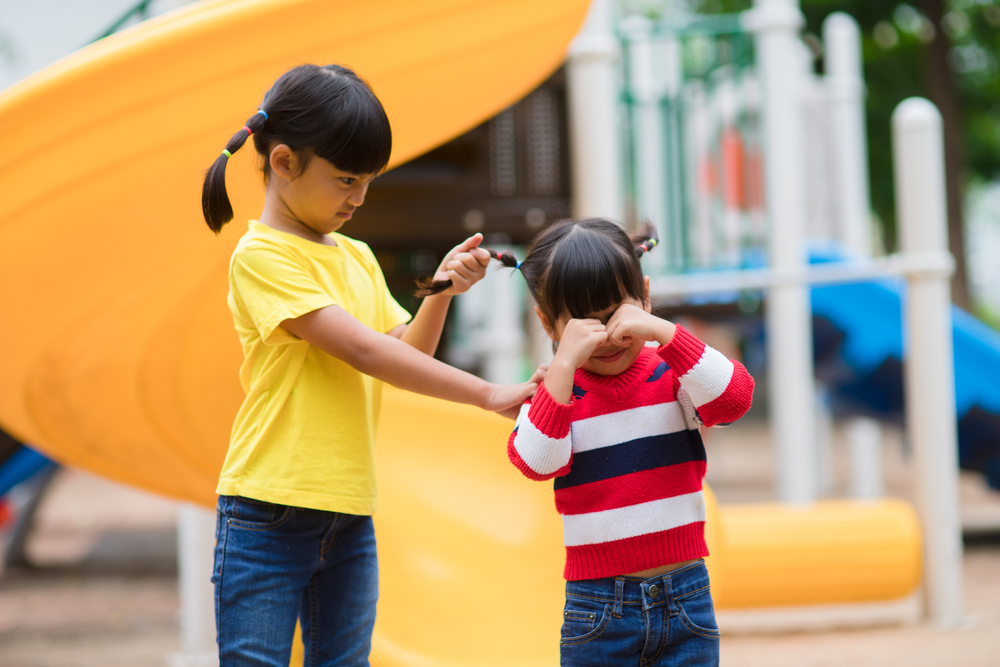
Currently, schools have fully resumed classes, and children have more time to spend with their classmates. Sometimes, children may be teased or bullied at school. When they don’t know how to express these emotions, they may react with aggressive behavior, which may be misunderstood by teachers.
For example, in a class of children playing together, one child may be teased for not performing well. At this moment, the child may not know how to handle the feeling of being teased or bullied, so when given the opportunity, the child may push or kick things, or even lie on the ground and scream. When the teacher arrives and sees this scene, they may naturally think that the problem lies with the child and may scold or lecture them. However, the teacher may not have noticed what happened before the incident.
When facing bullying or teasing, children often don’t know how to ease their feelings, which becomes a headache for many parents. In fact, when children are bullied or teased in daily life, they usually seek comfort from their parents first. If parents can comfort their children appropriately, such as if the child says to their mother, “Mom, they are making fun of me,” and the mother can comfort the child by patting them and saying, “Yes, sometimes some kids do that; it’s okay.” At this moment, it is a critical time, and the child will internalize this comforting feeling.
When the child returns to school and is teased again, because they received comfort from their parents before, they can comfort themselves or even ignore others’ teasing and continue playing or doing their own thing. This reduces the possibility of unnecessary misunderstandings by the teacher, who may think the child is misbehaving, pushing others, kicking things, or screaming. Of course, on the other hand, if the teacher can timely ask the child about the cause and effect of the incident, it is also a good method to let the child express their grievances and calm their emotions.
During the kindergarten years, children spend four years from N class to K3, and they will also make some friends, forming their own circles of friends. But after the summer break, when they will be promoted to primary school, everything can suddenly change. Some classmates may continue to attend the same school but may be placed in different classes, causing anxiety and discomfort.
Of course, some children who start primary school and make new friends may forget their good kindergarten classmates. But some children may need more time to develop their social skills, so they may be more concerned about their former kindergarten friends.
Parents can keep in touch with their child’s kindergarten friends, especially since most parents have access to kindergarten parent groups. When the child starts school in September, if they find that they don’t have as many friends to play and chat with as they did in kindergarten, they may start to develop a dislike for school. At this point, parents can help by organizing get-togethers, such as by telling a friend’s mother, “My son really misses your son.”
Let these two children develop a sense of fellowship during this transitional period. After they enter primary school and go through a longer period of time, they will also make new friends. However, during this transitional period, we also want to let them know that their good friends from kindergarten are still around, they haven’t disappeared. They will slowly let go of them as they make new friends in primary school.
But apart from the separation from their friends, they may also have some anxiety, to varying degrees. For example, if a child really doesn’t want to go to school, it can be troublesome for the mother, and the child may even cry when coming back home or refuse to change their school uniform. After all, their world has completely changed since they started first grade, with different teachers, environments, and more intense class schedules.
Usually, after school, a child might say to you, “I miss you so much today!” This sentence is actually a magic word. Where is the magic word? Many parents don’t know and will directly respond, “I miss you too.” However, the child doesn’t understand that when they say, “I miss you so much today!” after school, it actually indicates that they have had some difficulties today.
Going to school is actually very busy. They have to listen to lectures, do classwork, play during recess, have lunch, and participate in various activities. After 35 minutes, they have to switch to another teacher and learn new things. There is actually no space for them to sit and relax, thinking about their parents. But when something doesn’t go smoothly, they will think of their parents first because their parents are their strongest support.
So if a child proactively says, “I miss you so much today!” right after school, parents should ask them, “When do you miss me the most?” Then, we will be able to understand more clearly what they are facing. Is it when they have no friends to play with during recess? Is it when the teacher asks a question they don’t know how to answer? Is it when they don’t understand what they are learning? This will help us know how to better assist them.
Source: Registered Dietitian (Public Health) (UK), Ng Pui-Yu
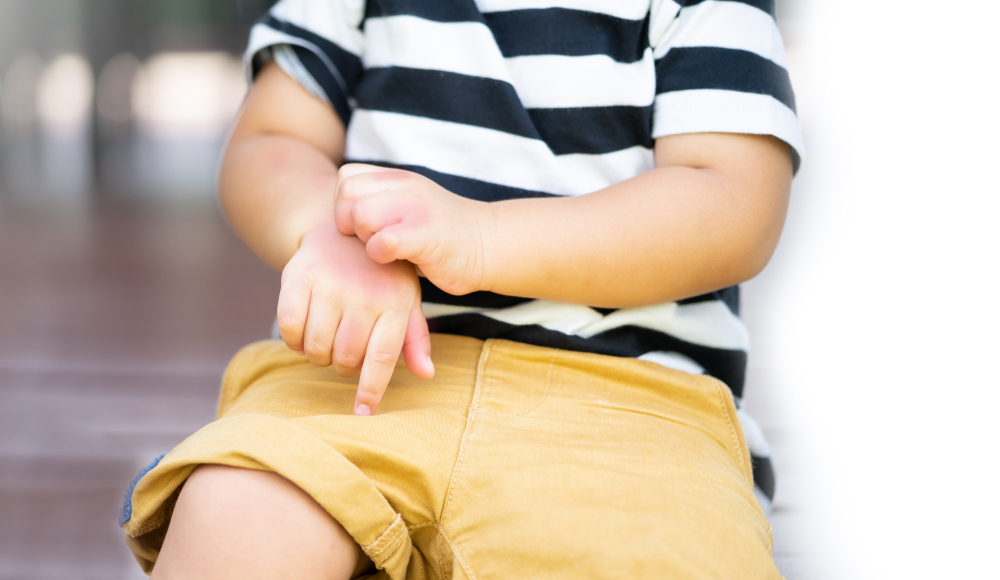
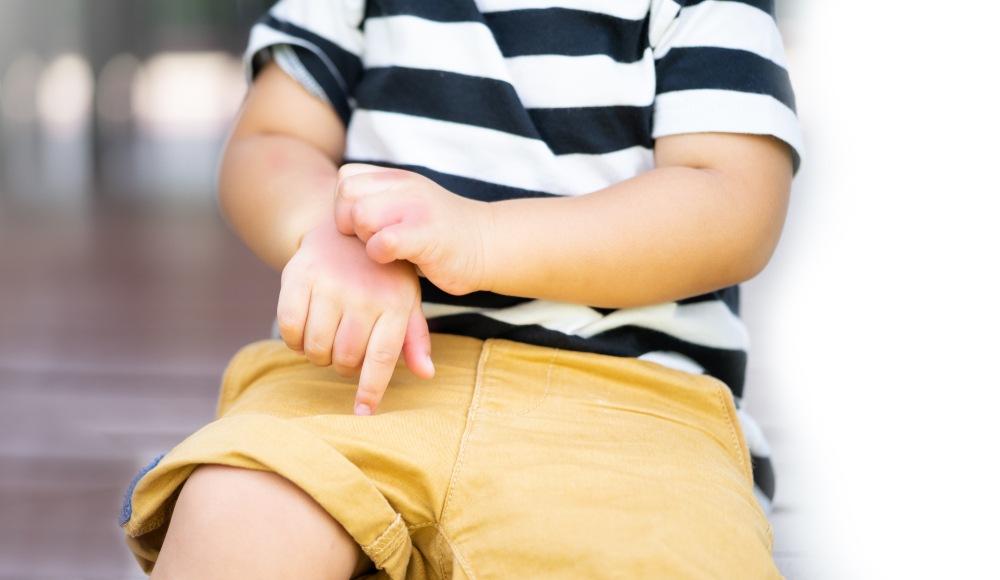
Many kids have dry skin or even eczema, and their parents work hard to find the right moisturizers and other skin care products for them. In fact, in addition to topical skincare products, we should also pay attention to children’s diets. The most direct way, of course, is to drink more water. How much water should be drunk?
In fact, our body’s need for water is deeply influenced by the weather. For example, in dry weather, we need more water, as well as to account for children’s activity levels and how much they sweat. The water content in food also affects their need for water. If a child urinates every 3 to 4 hours and the urine is light yellow with no strong odor and the stool is not very hard and does not cause difficulty during bowel movements, it usually means that their water intake is sufficient.
For children aged 2 to 5, they need about 4 to 5 cups of fluid a day, and water should be the main source. Unsaturated fatty acids, like omega-3, are also important for maintaining the integrity of cell membranes, which keep harmful substances out and keep the skin moist and flexible. Omega-3 fatty acids can also help calm immune responses that are too strong in people with skin allergies or eczema.
We should also avoid certain foods, such as candies, cookies, and white bread, which are refined foods. Instead, we should choose low-glycemic index foods, such as brown rice and whole wheat bread, which are important for controlling sensitive conditions. Antioxidants, including common vitamins A, C, and E, are also important and can be found in fruits, vegetables, and nuts of different colors, making them great sources of antioxidants.
In summary, to have healthy skin, in addition to having enough water, you should eat high-fat fish such as salmon or yellow croaker twice a week. You can also replace some cookies and candy with plain nuts, fruits, and so on, and it is ideal to eat a variety of vegetables and fruits.
By the way, if a child’s chewing ability is not well developed, there is a chance of choking when eating nuts. Therefore, we should choose some smaller nuts, such as pine nuts, which are also a good option.
Source: Dr. Law Wai Pak, Assistant Professor of the Department of Psychology at the Education University of Hong Kong and a registered educational psychologist
When it comes to getting their kids to study, many parents feel very frustrated and wish their kids could be self-motivated. When it comes to improving their children’s motivation to learn, many parents first think of using rewards and punishments. But which is more effective, using a stick or a carrot?
In fact, I believe that most modern parents understand that punishment is not a very effective method because it can hurt children’s bodies and undermine their self-esteem. Does this mean that using rewards is more effective? For example, “If you finish your book, you can have a pack of chips.” However, this method also carries hidden risks.
First of all, this reward often has to be constantly increased in order to be effective. Secondly, when there are no rewards, children will not automatically be motivated to study. Besides using punishment and reward, is there a third way?
Here, I would like to introduce three treasures to everyone: “sense of competence,” “sense of autonomy,” and “sense of relatedness.” What is the sense of competence? It is the belief that a child can learn new things and handle challenges. Parents can choose some challenging learning materials or homework that is not too difficult or easy for their children. For example, when they come to the library to choose a book, they should not choose a book with too many difficult words. Children should at least understand 70–80% of the words in the book. In addition, parents should provide more positive and helpful feedback to their children, appreciate their efforts, and brainstorm problem-solving methods with them.
The second thing is the sense of autonomy. Sometimes children may have a high sense of ability, but they will not learn autonomously when they feel oppressed. What can parents do to enhance their children’s sense of autonomy? You can let them make more decisions, encourage them when they study, and only offer help when they need it. Also, don’t give them too many instructions or use rewards and punishments inappropriately, as this can erode their sense of autonomy.
Third, it’s the sense of relationship. Since birth, everyone has had a need to be loved and cared for, and when children feel loved and cared for, they develop trust in their parents. When you ask them to study again, they will take it more seriously. How can parents strengthen their sense of relationship with their children? Listen to them more often, express empathy, and interact with them with a warm attitude. The most important thing is unconditional love, which means loving them regardless of whether their grades are good or bad.
If next time we urge children to study but they refuse, we can start with these three aspects: autonomy, competence, and relatedness. Stop and think: How can I satisfy the child’s needs in these three areas? When these three needs are met, children will naturally and automatically learn and grow.